
When a kid or teen enters residential treatment, the goal is to provide more than a place to stay. At Ellipsis, we strive to create an environment that supports healing, growth and, when it’s safe to do so, a successful transition back to their home and caregivers.
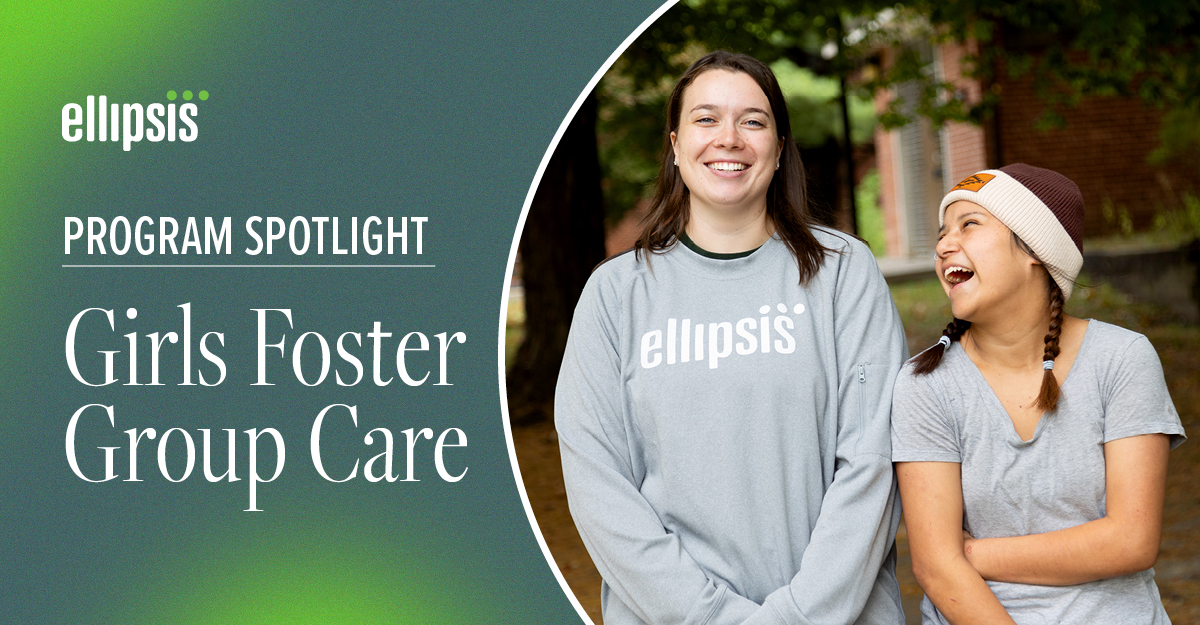
For girls who benefit from this level of care, Ellipsis offers something particularly important: a therapeutic space designed specifically with their well-being in mind. Our Girls Foster Group Care provides 24-hour supervision for youth whose behavioral or emotional needs can’t safely be met at home. Through individualized treatment, counseling, education, relationship building and everyday opportunities to develop new skills, the program helps them move beyond crisis and begin building greater stability.
A Campus Created Just for Girls
When Ellipsis opened the Barbara Lee Noble Campus in Des Moines, this important work found a new home. The campus expands Ellipsis’ continuum of care for girls, including dedicated foster group care services and opportunities for young women who are ready to transition into Supervised Apartment Living (SAL). It provides an environment centered on their needs throughout their progress.
The demand for specialized residential programs is particularly significant as Iowa continues to reshape its child welfare system. Before Ellipsis opened this campus, girls in need of foster group care in central Iowa often had to leave their communities, sometimes traveling hours away, to find an appropriate placement. Now, they can stay closer to home while receiving comprehensive wraparound services, including therapy, life skills coaching and career readiness.
When Survival Has Been the Priority
One young woman who came to Ellipsis knew what it meant to survive without stability. She had spent an extended period of her childhood without a safe, consistent home. She experienced tremendous loss and challenging circumstances no child should have to navigate by themselves. Eventually, she recognized something had to change. Through Ellipsis’ Girls Foster Group Care, she found the structure and guidance to begin that journey.
She worked with staff to process the emotions connected to experiences that shaped her life. Day by day, she established routines, returned to school, formed relationships and started showing more confidence.
Her progress illustrates an important part of residential treatment: Behaviors don’t exist in a vacuum. The National Child Traumatic Stress Network shares that complex trauma can disrupt a child’s sense of safety and affect emotional, behavioral and interpersonal development. Kids and teens who come to Ellipsis bring their experiences with them. Understanding what may sit beneath a behavior allows our team to respond to more than what they see on the surface. For Girls Foster Group Care, that can look like a combination of taking accountability, exploring new treatment options and practicing healthier ways of responding.
Helping Girls Build Their Voice
As the young woman in Girls Foster Group Care progressed, she become more engaged in her treatment and began using her experiences to advocate for other young people involved in the child welfare system. She started speaking up, sharing her perspective with Ellipsis and community leaders, and taking on new responsibilities.
While Ellipsis wants girls to leave the program feeling successful in reaching their treatment goals, we also want them to recognize their strengths, understand the impact of their choices and know how much they matter.
Creating a Path to What’s Next
Residential care is never the destination. The Iowa Department of Health and Human Services describes Girls Foster Group Care as part of a continuum designed to provide a safe, structured environment that addresses each child’s individual needs while maintaining connections to family and community.
For some, progress means returning home or moving into another family setting. For others, like the young woman in this story, the next step may be SAL at Ellipsis. After making significant progress in Girls Foster Group Care, she transitioned to the SAL program, where she could continue receiving support while learning how to manage the responsibilities of independent adulthood, including balancing daily life, work and school.
Her journey shows why a continuum of care is essential. Young people don’t suddenly stop needing guidance because they’ve completed a program. The level of assistance changes as they strengthen their skills, confidence and independence.
Ellipsis’ Girls Foster Group Care helps make that progression possible for so many girls and young women. The program offers them a place to understand their experiences, heal and grow — and when they’re ready, a place to shape what’s next.
Learn more about Ellipsis’ Girls Foster Group Care and how you can help young women build safer, more stable futures.